GUIDE / BATTERY STORAGE
Find land for battery storage – what should you review?
The right land for battery storage needs room for more than batteries. Start with project power and energy, then compare land, surroundings and grid information on the same basis.
Describe the facility before choosing a site
To find land for battery storage, first describe what needs to fit. Specify power in MW and energy in MWh. Keep required grid import and export separate from battery ratings. This makes the project clearer for the grid operator to assess.
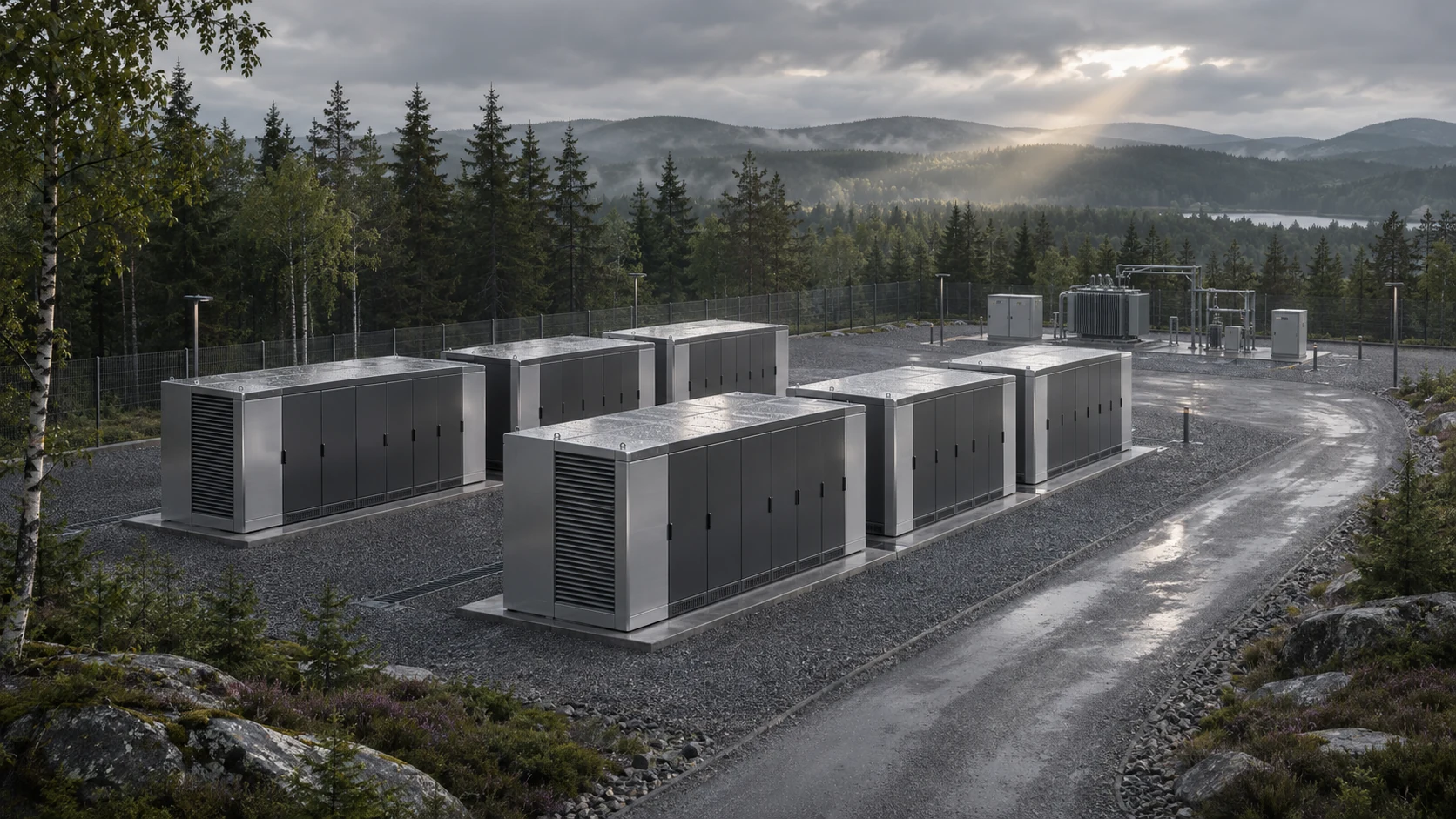
Also decide which equipment is included and what space is needed for equipment areas, maintenance and access. Two plots of equal area may offer very different layouts. The shape of usable land is therefore part of site selection.
Check the whole layout against the land
Start with land that can actually be used. Review terrain, mapped buildings and obstacles, and equipment and maintenance fit. A large continuous area may need to be divided when surroundings and project clearances are considered.
In Gigaplex, compare site suggestions and view batteries, equipment areas and specified clearances in one layout. Terrain information helps review slope beneath the equipment. Foundations, earthworks and final design then require site-specific assessment.
Use substation proximity to frame the next grid question
Distance to a mapped substation is useful in an initial comparison. It does not confirm the substation can accommodate the project. A short map distance may become a different actual cable route across roads, properties and other obstacles.
Gigaplex shows mapped substation candidates and straight-line distances alongside the site. Include grid import and export in discussions with the operator. Actual capacity, connection point, cable route, cost and timing need project-specific confirmation.
Review surroundings and land access early
Compare nearby buildings, land use and protected areas. Record what is based on mapping and what needs on-site investigation. Preliminary layout clearances support further review of maintenance, fire protection and manufacturer installation requirements.
Contact the landowner about access rights and the municipality about planning conditions. Save questions, sources and answers with the site so your team can track what has been reviewed and what remains.
Compare alternatives using the same requirements
Keep power, energy and equipment choices consistent when comparing locations. Otherwise, it is hard to distinguish differences in land from changes to the facility. Record why a site is rejected or taken forward.
Machine learning in Gigaplex helps identify patterns and prioritise suggested sites against project requirements and available information. Team review and subsequent decisions from relevant parties determine the next step.
ILLUSTRATIVE PROJECT EXAMPLE
A battery project with 5 MW and 10 MWh
Two locations are assessed for the same battery facility. One is closer to a mapped substation but has a narrow site. The other offers more maintenance and equipment space. Compare both before letting substation distance determine the selection.
- Battery power
- 5 MW
- Energy capacity
- 10 MWh
- Grid import / export
- Specified separately
Take a layout and clear grid requirements into the next discussion. This example illustrates a workflow and does not assess a real site or available grid capacity.
Checklist for the next step
- Power, energy, grid import and export are described.
- Battery units, equipment and maintenance fit in a preliminary layout.
- Terrain, surroundings and specified clearances are reviewed.
- Land access and municipal planning conditions are identified for follow-up.
- Next questions for the grid operator and the responsible team member are documented.
Further reading from the sources
Follow current guidance from the relevant authority and grid operator for your project. These sources provide further reading on the guide's topics.