GUIDE / SOLAR ENERGY
Find land for a solar park – compare land, surroundings and grid information
A solar park needs a site where panels, equipment and maintenance work together. Early site analysis helps compare alternatives and identify questions for further investigation.
Start with the scale of the solar park
Start with installed panel capacity in MWp and specify whether battery storage is included. Panel capacity, battery power and energy, and grid export are different values. Keeping them separate makes site comparisons more useful.
When finding land for a solar park, total area is only the beginning. Understand how much continuous land is usable and how equipment, access and maintenance will work. An early layout makes these questions concrete.
See which part of the land can be used
Review land use, mapped obstacles, surrounding buildings and protected areas. Consider the area's shape and continuity. Narrow sections or obstacles may affect panel layout even when total property area appears sufficient.
Gigaplex checks panels, equipment areas and maintenance space against site information. Terrain checks help compare slope beneath the layout. Foundations and earthworks are then investigated in the technical assessment.
Review the grid question alongside the layout
A nearby mapped substation can start the connection discussion. It does not confirm spare export capacity or the correct connection point. Also check obstacles and land issues along potential cable routes.
Describe required solar export and any import when contacting the operator. If storage is included, explain operation so peak panel capacity is not confused with connection power. The grid operator assesses project-specific connection conditions.
Give optional battery storage its own space
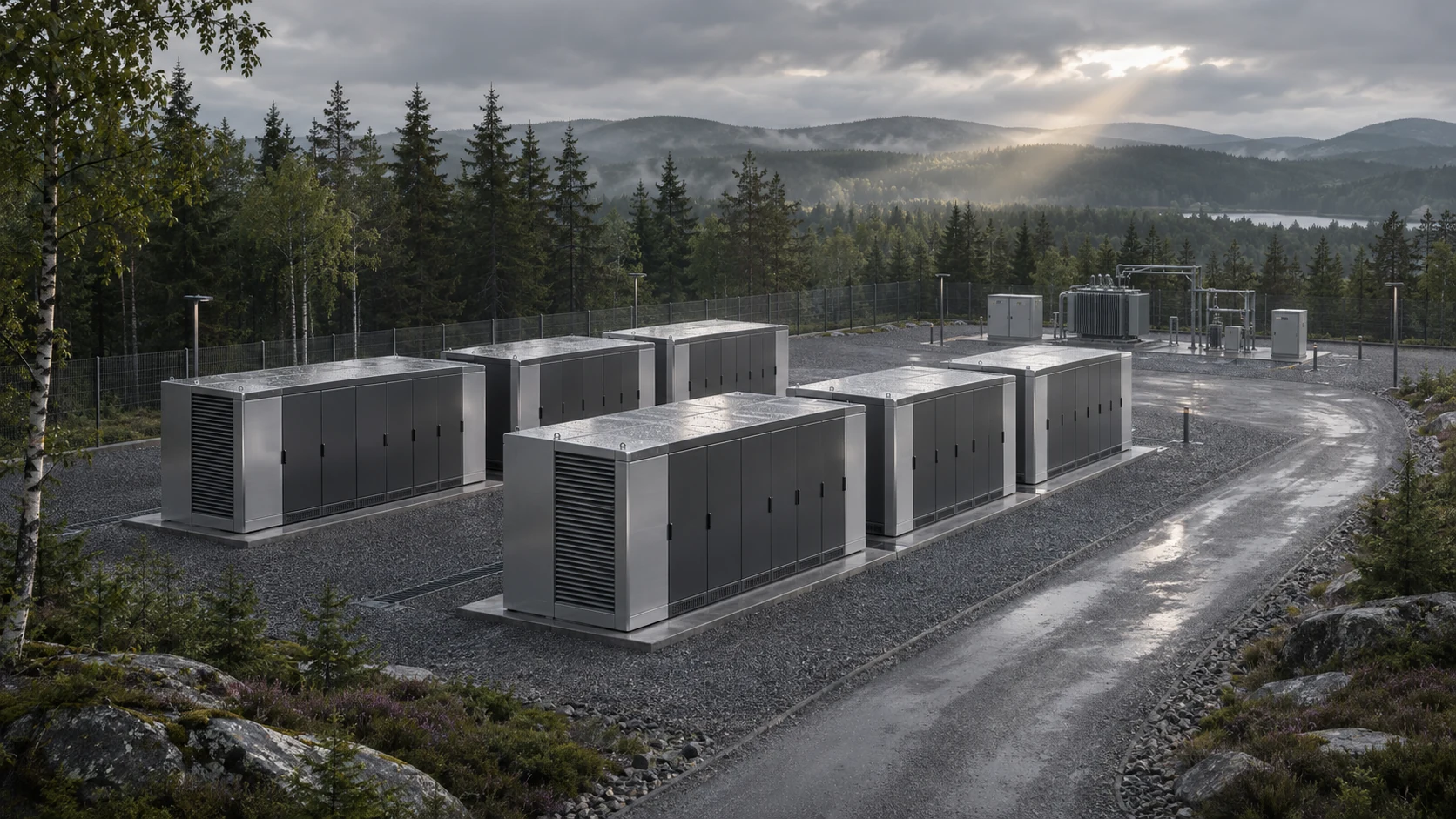
Adding battery storage introduces equipment, maintenance needs and clearances to review. Specify battery MW and MWh separately. A shared site must accommodate both components and their requirements.
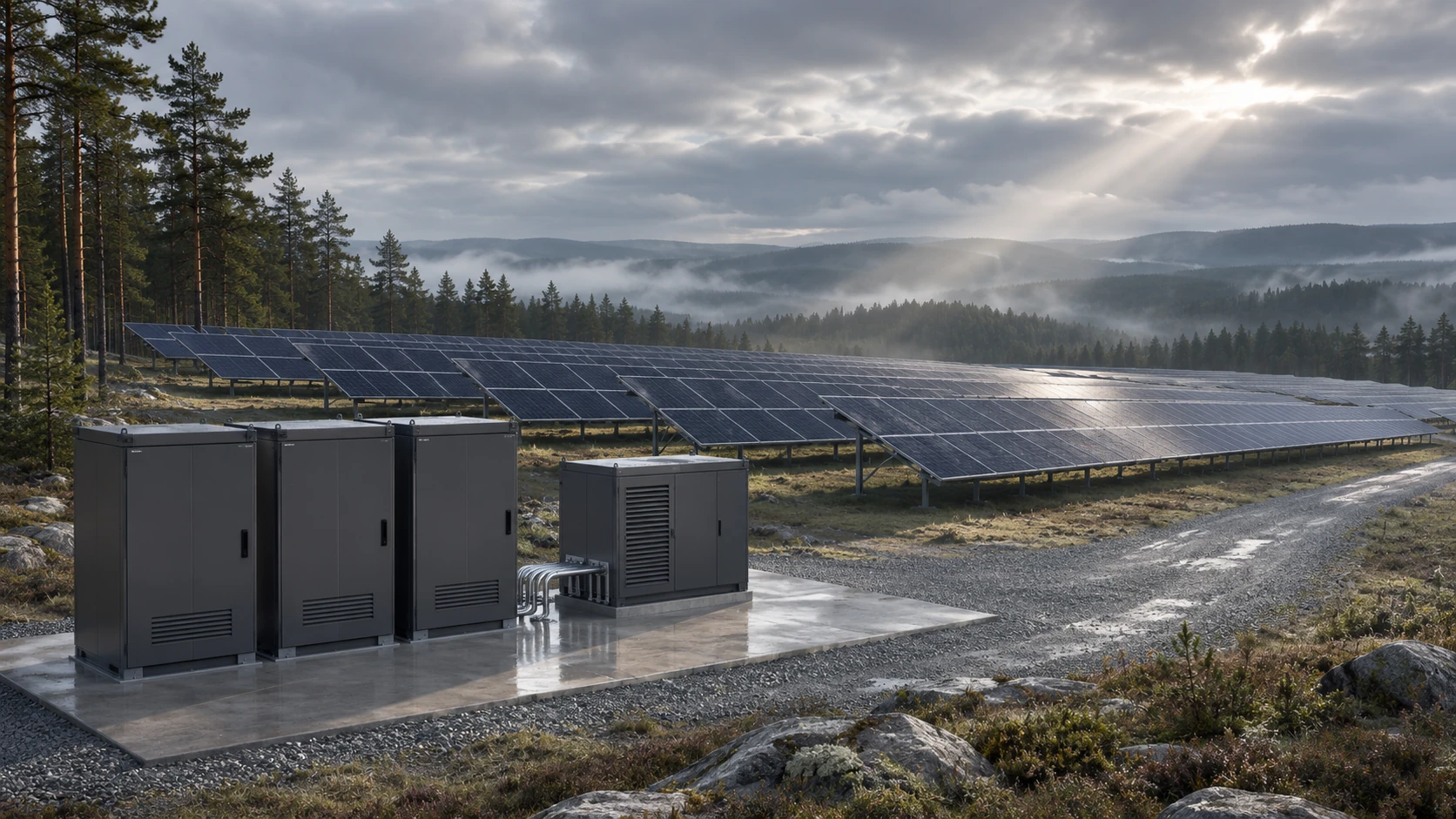
In Gigaplex, explore solar with or without BESS and view batteries alongside panels. The layout shows positioning and space. Production forecasts, shading and final technical design need separate assessments.
Gather information to compare locations
Document compared sites, project requirements and why alternatives proceed. Land, terrain, surroundings and grid information should be traceable to sources. This makes the selection easier to explain and review.
Early site comparison can inform a location assessment. Its scope and additional information must be assessed for each project with relevant authorities and specialists. Gigaplex brings site information and project work together ahead of these steps.
ILLUSTRATIVE PROJECT EXAMPLE
A solar park with optional storage
Compare two sites for a 6 MWp facility. Start without storage, then add a battery with separate power and energy. See how equipment areas and usable space change at each site.
- Installed solar capacity
- 6 MWp
- Battery power · optional
- 2 MW
- Battery energy · optional
- 4 MWh
Grid export is specified separately. This illustrative layout scenario provides no production forecast, permit assessment or confirmation of grid connection.
Checklist for the next step
- Panel capacity and required grid export are kept separate.
- Usable land, obstacles and terrain are reviewed.
- Panels, equipment and maintenance space are included in the layout.
- Optional storage has its own power, energy and space requirements.
- Site alternatives, selection reasons and questions for the landowner, municipality and grid operator are gathered.
Further reading from the sources
Follow current guidance from the relevant authority and grid operator for your project. These sources provide further reading on the guide's topics.